Charles Riley, a catalog librarian specializing in African languages at Yale Library, has made significant progress in preserving and making indigenous African languages accessible to researchers. Among his notable contributions are efforts to encode Liberian scripts into the Unicode Standard, ensuring their use in modern digital platforms.
Riley’s work with the Vai script, spoken by the Mandé people of Liberia and Sierra Leone, set a precedent for his continued focus on Liberian languages. He collaborated with Michael Everson to encode the Bassa Vah script and is now working with the Loma language, an indigenous Liberian tongue spoken by the Mandé people.
Through engagement with the Loma-speaking community in New Haven, Riley emphasizes the importance of cultural immersion in understanding the language’s mechanics and significance. Yale’s digitization of 132 Loma texts, previously destroyed during the Liberian Civil War, restores critical cultural heritage to the Liberian Loma community.
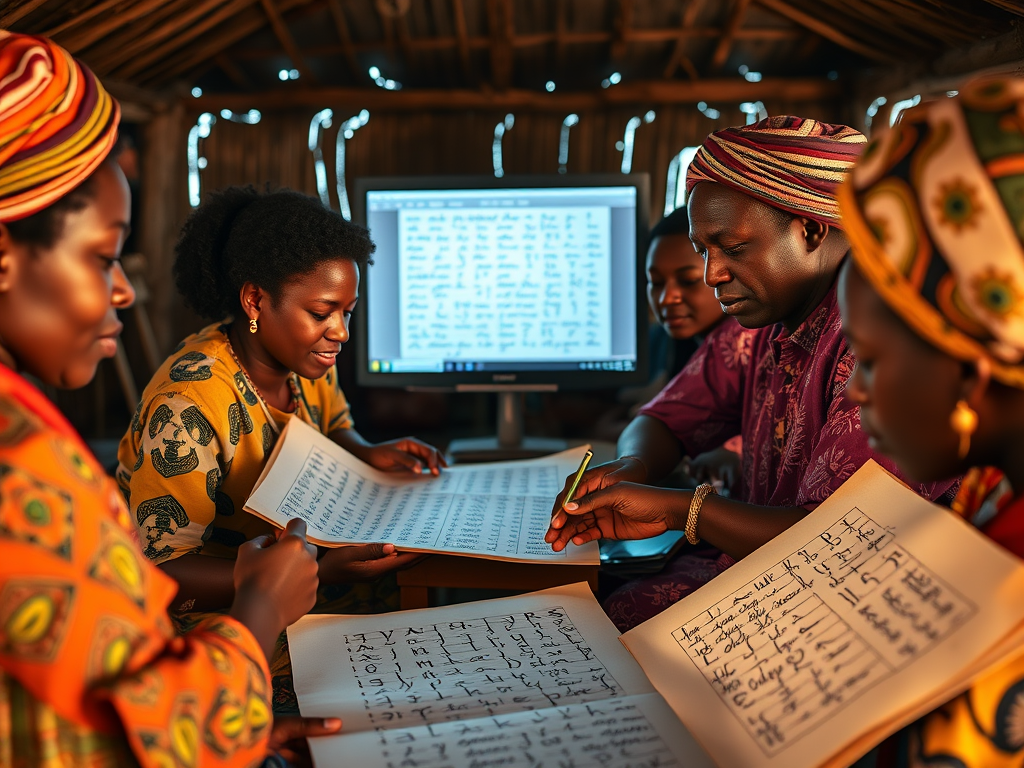
In collaboration with Abraham Keita ’24, Riley is working to encode the Kpelle script, spoken by Liberia’s largest ethnic group. This process includes translating and transcribing historical audio recordings to document the script’s usage and history.
The ongoing collaboration with linguists, including Dr. Giddings and others committed to the Liberia Endangered Language Project (LIBELP), demonstrates a collective dedication to preserving Liberia’s linguistic heritage.
These efforts reflect our shared vision to safeguard Liberia’s indigenous languages for future generations, cultivate cultural pride, and ensure their relevance in a digital age.
By encoding scripts like Vai, Bassa Vah, Loma, and Kpelle into Unicode, Liberian languages are gaining a global platform, making them accessible for education, communication, and cultural preservation. As always, we reaffirm our commitment to revitalizing and preserving Liberia’s endangered languages and rich cultural heritage.
 Liberian Language Institute